Event: Knowing the City – Movements, Epistemologies and Visions
A Housing and Urban Sociology Thematic Group conference
At the University of Sydney, 9 October 2025
Hosts: Greta Werner and Lutfun Nahar Lata (HaUS co-convenors)
Attendees online: Rahul Singh, Muhammet Esat Tiryaki, Satya Oza, Thilini Bandara Kumara Bandage, Jack Hynes and Alex Ettling, Indigo Willing and Leo Valls, Sukrit Nagpal, Ayushi Banerjee, Shivani Gautam, Tiara Sophie Trinita, Clair Daniels
Attendees in person: Jai Cooper, Gavin Smith, Tingting Liu, Roger Burrows, Julia Cook, Magdalena Szypielewicz, Michael Bounds, Vera Xia, Jialing Xie, Sebastian Salay, Ian Woodcock, Rohit Negi, Theodora Bowering, Francesca Sidoti, Alexandra Ridgway, Lata Lutfun Nahar, Greta Werner, Eduardo de la Fuente.
The TASA Housing and Urban Sociology (HaUS) thematic group hosted a one-day conference titled ‘Knowing the City – movements, epistemologies, and visions’ on 9 October 2025. This event aimed to explore ways of knowing the city and how these manifest in planning and the construction of the built environment. Demographic and economic data are increasingly being used to inform city master plans in Australia (Daniel & Pettit, 2022; Daniel & Pettit, 2025). Along with the use of big data in master planning, population trends, traffic patterns, environmental considerations and perhaps most importantly, political and economic considerations inform infrastructure development, land use, transport planning and health and education service provision. Tools such as Geographic Information Systems (GIS), sensors, and devices connected in an internet of things (IoT) can be used in traffic management, environmental monitoring, the design of public spaces, and emergency response planning. However, uses of the city exceed the intentions of planners and decision makers, with for example, the creative use of public space and storm water infrastructure by skaters, parkourists, artists, and others (Willing & Pappalardo, 2023). Furthermore, with market failures in social reproduction, increasing numbers of individuals are forced into informal accommodation (Gurran et al., 2021; Shrestha et al., 2021) or shelter in public space and homelessness (Australian Bureau of Statistics, 2012; Pawson et al., 2024). This workshop asks whether our approach to data is adequate. What kinds of data should be informing city making, how can this data be produced, and through what kinds of data producing practices can our knowledge and construction of the city be improved?
The conference theme was interpreted broadly to include the following themes:
· Competing epistemologies and their translation into housing/planning policy
· Data, algorithms, and the city
· Infrastructures of Care (Power & Mee, 2020)
· Social movements related to the city
· Alternative ways of knowing the built environment such as through play or artistic expression (Willing & Pappalardo, 2023)
· Co-operative approaches to the city (Crabtree-Hayes, 2024)
Program
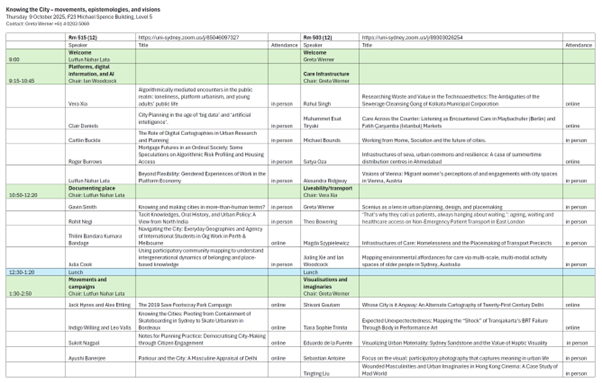
Platforms, digital information and AI
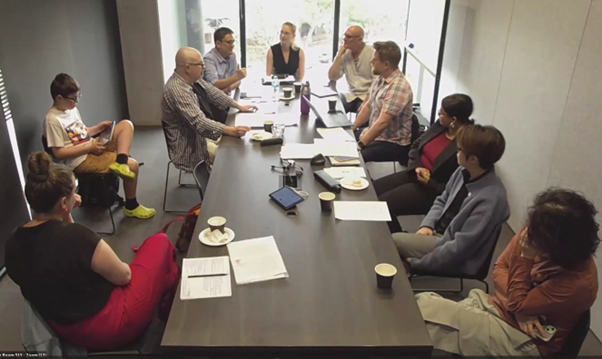
This session explored the effects of platforms and their associated algorithms and big data on city life, in the conceptualisation and planning of cities, but also in their effects on city life from the use of public space to the production and allocation of housing.
Care infrastructure
Ranging from the care work of dealing with waste, conversations of care in marketplaces, workplaces, through distribution of drinking water and gender mainstreaming of urban districts, this session highlighted the affordances of public space for care giving and receiving and the dangers of reduced encounters in both public and workspaces due to trends in working from home.
Documenting place
This session focused on how places are experienced by a diversity of human and non-human inhabitants, and the social processes by which issues are identified, along with the ways belonging is conceptualised in specific places. How we can draw on the knowledges, both human and non-human, of those whose voices are not normally heard.
Liveability and transport
The intersections of liveability and transport were explored in this session, especially in relation to ageing. An important finding that sparked discussion was the enjoyment and sense of adventure reported by older people in relation to multimodal transport journeys and sense of comfort experienced in relation to using buses because of the presence of bus drivers.
Movements and campaigns
This session focussed on the engagement of people with place through sports and other activities, and enhancing opportunities for civic engagement. On the one hand, movements such as those related to skateboarding, were shown to be self-driven and meeting with success in some places, in other areas there was a need to empower communities in the city planning process.
Visualisations and imaginaries
Contributions to this session used analysis of literature and film, participatory photography, artistic practice and surface textures to understand aspects of the city. It inspired discussion not only of the kinds of urban insights that can be produced by diverse methods, but also how traditional planning and urban design problems can be communicated in new ways.
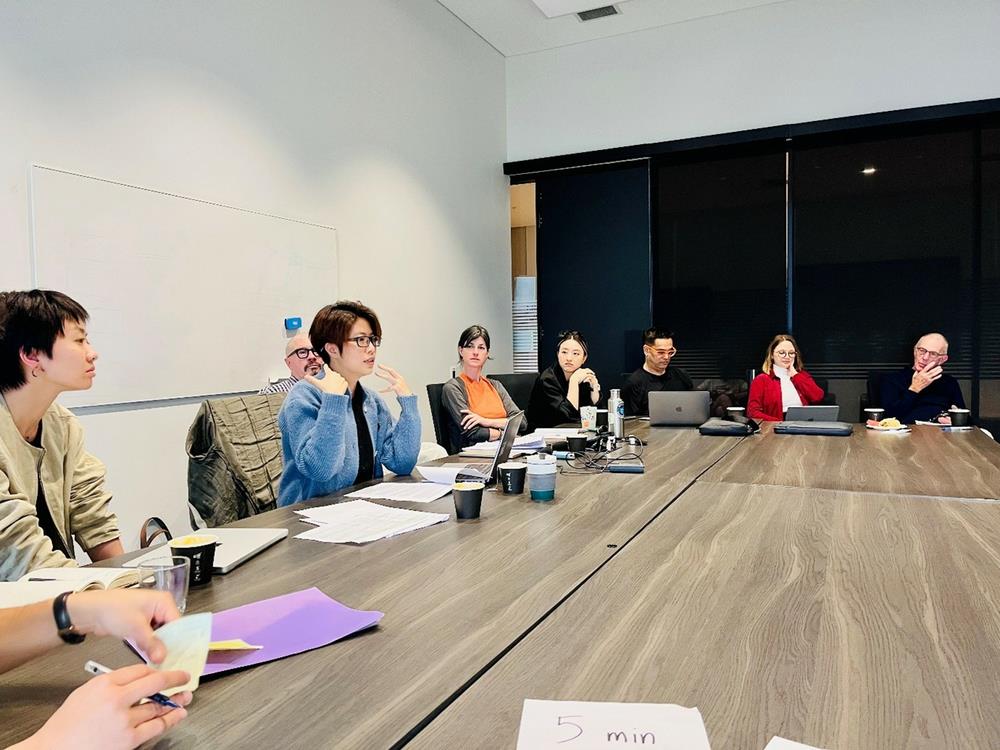
Attendees reported appreciating the refreshingly wide variety of approaches showcased during this event and as hosts we would like to thank all the participants for their useful and constructive questions and comments.
Stay tuned for a special issue call for papers in relation to this topic.
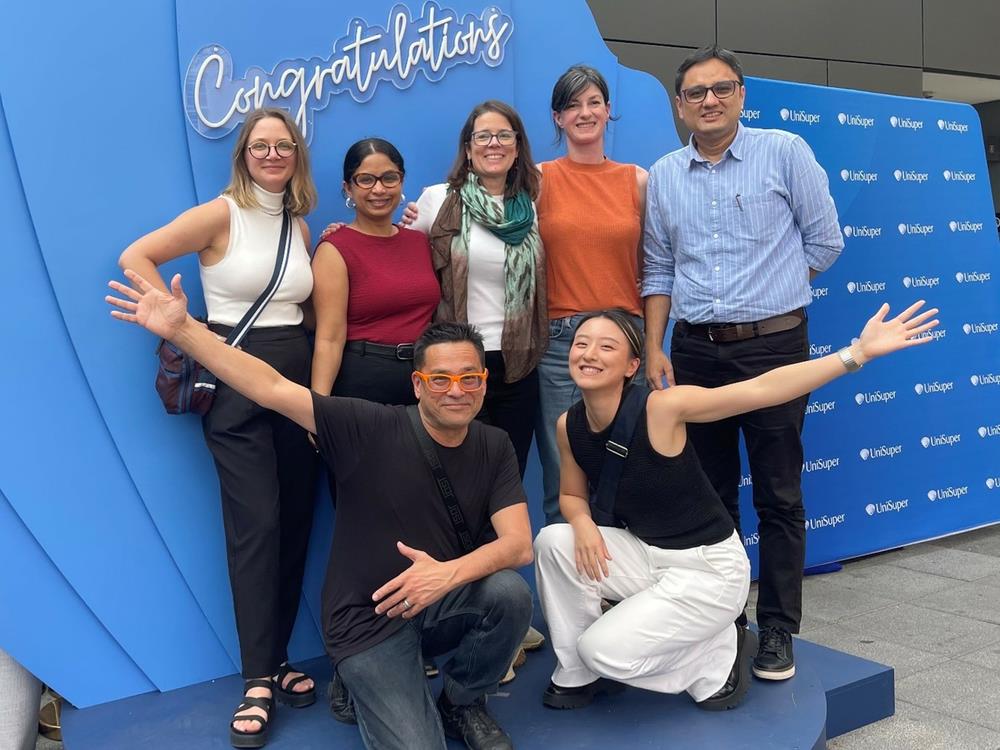
We are grateful for the support of the Australian Sociological Association (TASA) for funding this event and to the University of Sydney for in-kind support.
References
Australian Bureau of Statistics. (2012). Information paper - A statistical definition of homelessness. Canberra: Australian Government Retrieved from https://www.abs.gov.au/AUSSTATS/subscriber.nsf/log?openagent&49220_2012.pdf&4922.0&Publication&B4B1A5BC17CEDBC9CA257A6E00186823&&2012&04.09.2012&Latest
Crabtree-Hayes, L. (2024). Establishing a glossary of community-led housing. International Journal of Housing Policy, 24(1), 157-184. https://doi.org/10.1080/19491247.2022.2155339
Daniel, C., & Pettit, C. (2022). Charting the past and possible futures of planning support systems: Results of a citation network analysis. Environment and planning. B, Urban analytics and city science, 49(7), 1875-1892. https://doi.org/10.1177/23998083211072866
Daniel, C., & Pettit, C. (2025). The use of urban analytics in strategic planning – A case study of the greater Sydney region plan. Computers, environment and urban systems, 117, 102249. https://doi.org/10.1016/j.compenvurbsys.2025.102249
Gurran, N., Pill, M., & Maalsen, S. (2021). Hidden homes? Uncovering Sydney’s informal housing market. Urban studies (Edinburgh, Scotland), 58(8), 1712-1731. https://doi.org/10.1177/0042098020915822
Pawson, H., Parsell, C., Clarke, A., Moore, J., Hartley, C., Aminpour, F., & Eagles, K. (2024). AUSTRALIAN HOMELESSNESS MONITOR 2024. https://homelessnessaustralia.org.au/wp-content/uploads/2024/12/AHM_final.pdf
Power, E. R., & Mee, K. J. (2020). Housing: an infrastructure of care. Housing studies, 35(3), 484-505. https://doi.org/10.1080/02673037.2019.1612038
Shrestha, P., Gurran, N., & Maalsen, S. (2021). Informal housing practices. International Journal of Housing Policy, 21(2), 157-168. https://doi.org/10.1080/19491247.2021.1893982
Willing, I., & Pappalardo, A. (2023). Skateboarding, Power and Change (1st 2023. ed.). Springer Nature Singapore. https://doi.org/10.1007/978-981-99-1234-6